Podcast now available on Spotify & Apple Podcast. Watch now on Rumble.







Jump into the conversation.
Send your questions 📨
Earn 1.0 CNE with RighteousRN LLC
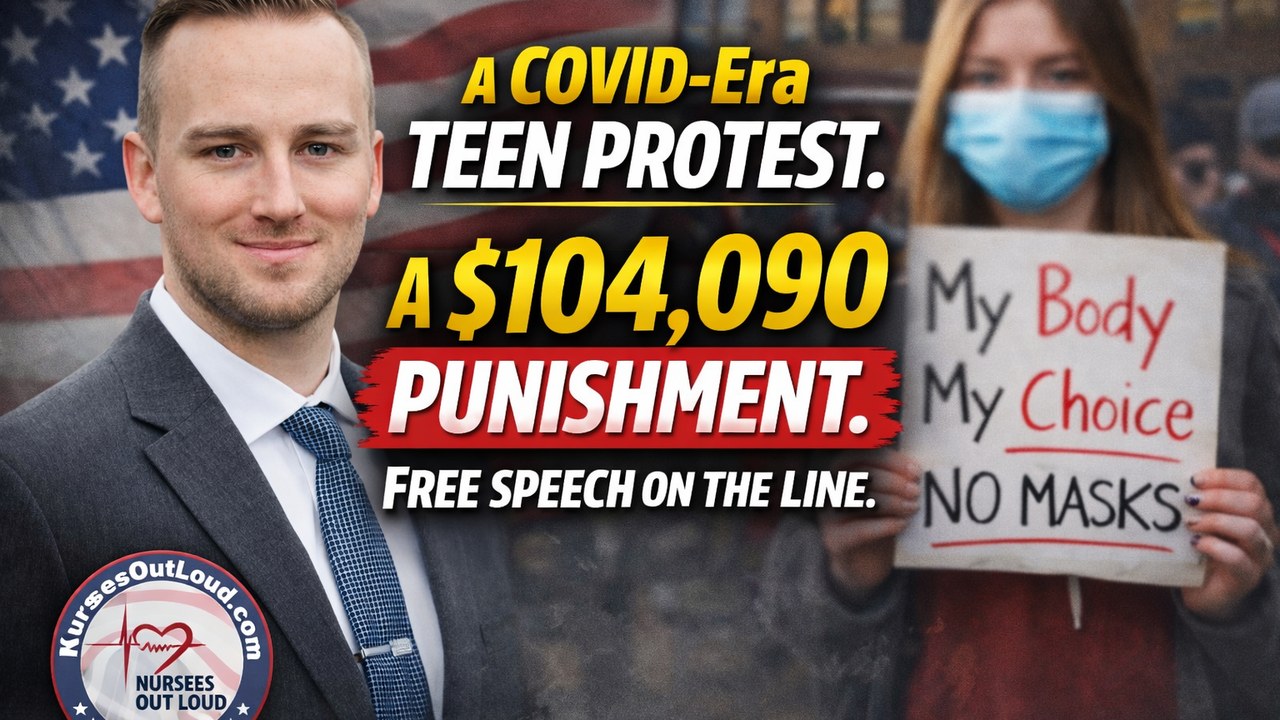
A COVID-Era Teen Protest. A $104,090 Punishment. Free Speech on the Line.
A teenage girl peacefully protested a government school policy during the COVID era — and her family now faces a $104,090.07 punishment for suing. In this episode, attorney Ryan Heath breaks down G.W. v. Coronado Unified School District, how anti-SLAPP is supposed to work, how courts inverted the process, and why this precedent could turn the First Amendment into a luxury only the wealthy can afford.
Jodi O’Malley adds nurse + parent commentary throughout, connecting this case to professional ethics, moral courage, due process, and the chilling effect retaliation can have on truth-telling and advocacy.
What You'll Learn:
How a COVID-era school protest became a $104,090.07 legal punishment attempt
Anti-SLAPP in plain English: what it’s designed to prevent — and how it can be inverted
Symbolic (expressive) speech and why peaceful dissent still matters in institutional settings
The chilling effect: how financial and professional retaliation silence advocacy
Practical takeaways for nurses navigating ethics, advocacy, and institutional pressure
Content Outline:
The case background and the six-figure financial penalty attempt
What happened to G.W. and why the institutional response matters beyond the mask debate
Nurse + parent commentary: humiliation, safety, and institutional retaliation
Anti-SLAPP explained and why process/burden allocation matters
Due process and the chilling effect on advocacy and public participation
Symbolic speech and civil liberties implications
Final takeaways: what nurses and parents can do right now
Learning Objectives:
After completing this activity, the learner will be able to:
Explain the purpose of anti-SLAPP laws and identify at least two ways anti-SLAPP can be misapplied in cases involving public institutions.
Define symbolic (expressive) speech and describe how expressive conduct may be protected under the First Amendment in policy-enforcement settings.
Identify at least three indicators of institutional retaliation (e.g., exclusion, humiliation, coercion) and connect them to ethical nursing principles such as advocacy, justice, and professional integrity.
Apply the concept of “chilling effect” to professional advocacy and select two risk-reducing strategies nurses can use when raising concerns (e.g., documentation practices, escalation pathways, professional comportment).
How to Earn
1.0 CNE:
To receive 1.0 contact hour, participants must:
Watch/listen to the full video episode
Review the required learning resources provided on this page (links + references)
Complete the post-test with a score of 80% or higher
Submit the course evaluation
A certificate will be issued upon successful completion.
Subscribe & follow NursesOutLoud: nursesoutloud.com
CNE details + resources: nursesoutloud.com
Full article context + references: Substack NursesOutLoud
Earn 1.0 CNE with RighteousRN LLC
A COVID-Era Teen Protest. A $104,090 Punishment. Free Speech on the Line.
A teenage girl peacefully protested a government school policy during the COVID era — and her family now faces a $104,090.07 punishment for suing. In this episode, attorney Ryan Heath breaks down G.W. v. Coronado Unified School District, how anti-SLAPP is supposed to work, how courts inverted the process, and why this precedent could turn the First Amendment into a luxury only the wealthy can afford.
Jodi O’Malley adds nurse + parent commentary throughout, connecting this case to professional ethics, moral courage, due process, and the chilling effect retaliation can have on truth-telling and advocacy.

What You'll Learn:
How a COVID-era school protest became a $104,090.07 legal punishment attempt
Anti-SLAPP in plain English: what it’s designed to prevent — and how it can be inverted
Symbolic (expressive) speech and why peaceful dissent still matters in institutional settings
The chilling effect: how financial and professional retaliation silence advocacy
Practical takeaways for nurses navigating ethics, advocacy, and institutional pressure
Content Outline:
The case background and the six-figure financial penalty attempt
What happened to G.W. and why the institutional response matters beyond the mask debate
Nurse + parent commentary: humiliation, safety, and institutional retaliation
Anti-SLAPP explained and why process/burden allocation matters
Due process and the chilling effect on advocacy and public participation
Symbolic speech and civil liberties implications
Final takeaways: what nurses and parents can do right now
Learning Objectives:
After completing this activity, the learner will be able to:
Explain the purpose of anti-SLAPP laws and identify at least two ways anti-SLAPP can be misapplied in cases involving public institutions.
Define symbolic (expressive) speech and describe how expressive conduct may be protected under the First Amendment in policy-enforcement settings.
Identify at least three indicators of institutional retaliation (e.g., exclusion, humiliation, coercion) and connect them to ethical nursing principles such as advocacy, justice, and professional integrity.
Apply the concept of “chilling effect” to professional advocacy and select two risk-reducing strategies nurses can use when raising concerns (e.g., documentation practices, escalation pathways, professional comportment).
How to Earn 1.0 CNE:
To receive 1.0 contact hour, participants must:
Watch/listen to the full video episode
Review the required learning resources provided on this page (links + references)
Complete the post-test with a score of 80% or higher
Submit the course evaluation
A certificate will be issued upon successful completion.
Subscribe & follow NursesOutLoud: nursesoutloud.com
CNE details + resources: nursesoutloud.com
Full article context + references: Substack NursesOutLoud
Featured Guest
Ryan Heath is the President and CEO of The Gavel Project, a 501(c)(3) public charity that funds strategic constitutional litigation to protect civil liberties—especially for women and children. He is an Arizona attorney and civil rights advocate who has supported families nationwide in challenging COVID-era mandate abuses and other institutional policies impacting children and parental rights. Ryan is also the founder of Heath Law, PLLC.
Disclosure
Ryan Heath has served as Jodi O’Malley’s attorney in an unrelated matter. Jodi is not compensated for sharing this content. Donations to The Gavel Project are voluntary and no portion benefits Jodi. This activity is educational and not legal advice.
Learn more / support The Gavel Project
Website: www.thegavelproject.com
Instagram: https://www.instagram.com/thegavelproject/
Substack: https://thegavelproject.substack.com/
KSBN Provider Statement
Righteous RN, LLC is an approved provider of nursing continuing education by the Kansas State Board of Nursing (KSBN Provider #LT 0345-1225). KSBN is accredited by the American Nurses Credentialing Center’s Commission on Accreditation (ANCC), making CE hours valid in most U.S. states and accepted by national certifying bodies. It is the responsibility of each nurse to verify specific state and employer CE requirements.
Featured Guest
Ryan Heath is the President and CEO of The Gavel Project, a 501(c)(3) public charity that funds strategic constitutional litigation to protect civil liberties—especially for women and children. He is an Arizona attorney and civil rights advocate who has supported families nationwide in challenging COVID-era mandate abuses and other institutional policies impacting children and parental rights. Ryan is also the founder of Heath Law, PLLC.
Disclosure
Ryan Heath has served as Jodi O’Malley’s attorney in an unrelated matter. Jodi is not compensated for sharing this content. Donations to The Gavel Project are voluntary and no portion benefits Jodi. This activity is educational and not legal advice.
Learn more / support The Gavel Project
Website: www.thegavelproject.com
Instagram: https://www.instagram.com/thegavelproject/
Substack: https://thegavelproject.substack.com/
KSBN Provider Statement
Righteous RN, LLC is an approved provider of nursing continuing education by the Kansas State Board of Nursing (KSBN Provider #LT 0345-1225). KSBN is accredited by the American Nurses Credentialing Center’s Commission on Accreditation (ANCC), making CE hours valid in most U.S. states and accepted by national certifying bodies. It is the responsibility of each nurse to verify specific state and employer CE requirements.
Why Nurses Love Us
Why Nurses Love Us
01
02
03
Upgrade to the
Righteous RN Collective
Join for just $27/month and get:
Unlimited CEU access from podcast episodes
Exclusive access to live Zoom series
First dibs on workshops + merch
Members-only Telegram group
Nurse. Podcaster. Educator?
Let's Collaborate.
We're expanding our CEU catalog. If you're a nurse with a message, let us help you turn it into an accredited course.
Want CE Tools + Early Podcast Access?
Where to Listen + Follow


Where to Listen + Follow
Jodi O’Malley, MSN, RN, founder of NursesOutLoud is a long-standing provider of accredited Nursing Continuing Professional Development through the Kansas State Board of Nursing (Provider #LT 0345-1225)
Want to Do More?
For monthly donor options, sponsor recognition, or collaboration inquiries, email us at: [email protected]
Thank you for standing with us.
Let’s keep the volume up — together.
Jodi O’Malley, MSN, RN, founder of NursesOutLoud is a long-standing provider of accredited Nursing Continuing Professional Development through the Kansas State Board of Nursing (Provider #LT 0345-1225)
Want to Do More?
For monthly donor options, sponsor recognition, or collaboration inquiries, email us at: [email protected]
Thank you for standing with us.
Let’s keep the volume up — together.